How to choose baby sleep sounds without endless experimenting
Use a small decision process to choose an optional sleep sound, keep the room in mind, and avoid turning bedtime into a sound experiment.

To choose a baby sleep sound, first decide why you want one. Then listen to a small number of options at a low level during adult setup time, choose a texture you find unobtrusive, and stop browsing. There is no need to make your baby’s bedtime a comparison test.
You might want an optional familiar cue, or a steady background in a room with occasional interruptions. You might also decide the room does not need added sound. None of those choices measures how committed you are to helping your baby rest.
Name the job before the sound
Try finishing this sentence: “We are considering background sound because ______.”
Specific answers are useful: “We want a simple cue that the next caregiver can start,” or “We are trying to make the hallway sounds less noticeable while we begin the routine.”
Broad answers such as “We need to fix sleep” give a sound machine a job it cannot reliably do. A sound setting cannot tell you why your baby wakes, whether they need feeding, or whether a health concern needs attention.
The NHS’s baby-sleep guidance emphasizes that babies have different patterns. Keep your expectations grounded in the small part of the environment you are actually choosing.
Make the room ready first
Set up an appropriate sleep surface and keep the sound device outside it. Follow CDC guidance for back placement, a firm flat separate surface, and a sleep area free of loose bedding and soft objects.
Then address any noise source you can easily change. Lowering a television or moving a clattery task may be more useful than looking for a stronger sound. Our noisy-apartment guide offers examples that do not depend on making everyone silent.
If you use sound, plan the device’s location, playback level, and duration before settling on a texture. The setup checklist explains the AAP’s distance, low-volume, and limited-duration principles.
Choose one texture to start
During adult setup time, listen briefly and quietly to one candidate on the device you plan to use. Use everyday descriptions:
- Is it bright or low?
- Does it have obvious changes, droplets, or pulses?
- Does it feel unobtrusive to the adults sharing the room?
- Can another caregiver find the same sound easily?
If it is unpleasant or distracting to you, compare one alternative. You do not need to audition every sound in an app.
These questions help adults choose a household preference. They do not prove how a baby experiences the sound or establish a safe sound level. Keep the baby out of the listening demonstration, and never put headphones on a baby.
Use labels as descriptions
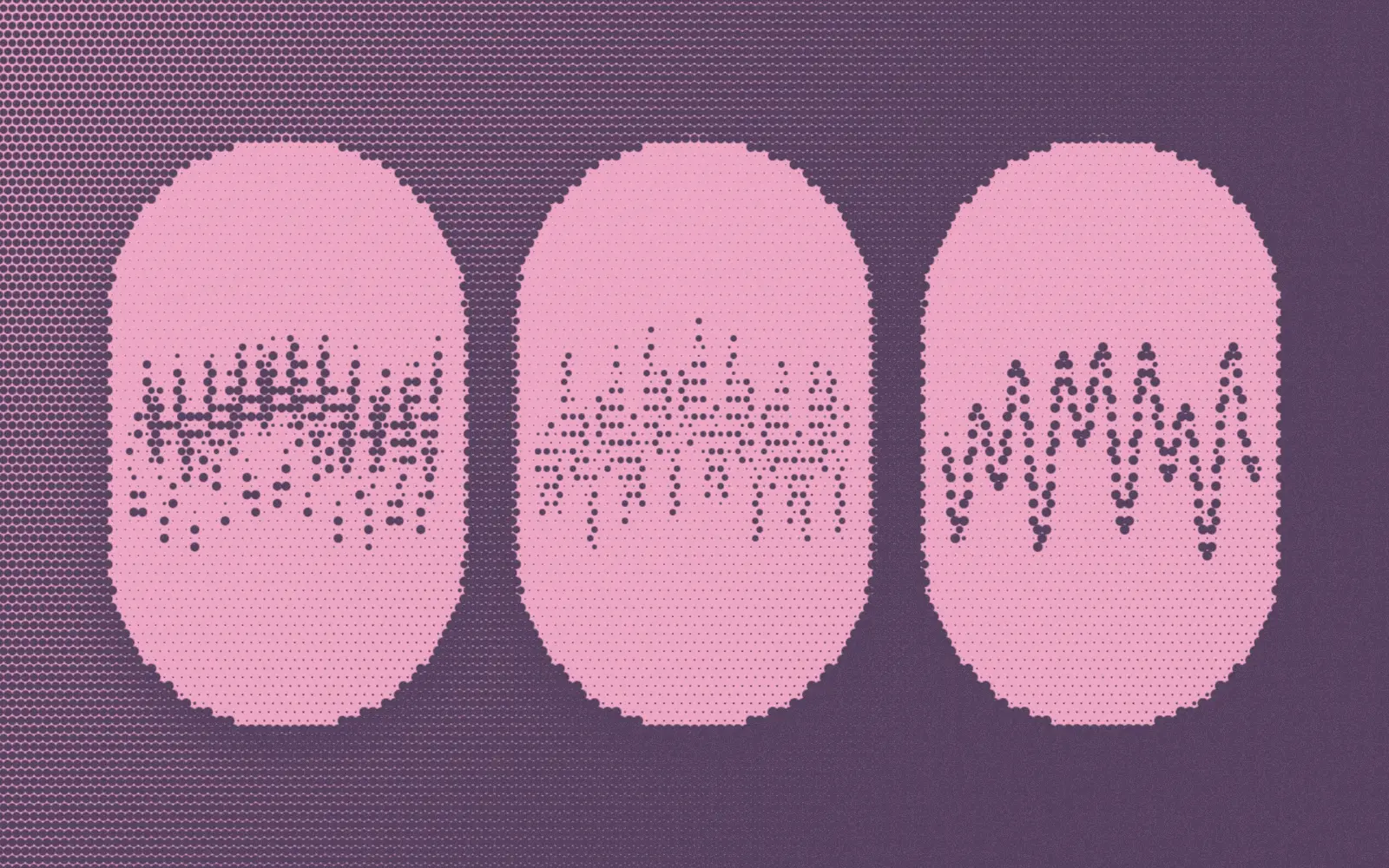
White, pink, and brown noise describe different frequency distributions. Rain, fan, water, and shushing describe a sound or scene. A label can point you toward a texture, but recordings and speakers still differ.
For example, two rain tracks may have very different changes in intensity. A deep sound through a small speaker may not resemble the same sound through a larger one. “Gentle” in a title is not a technical measurement.
Our white, pink, and brown noise guide explains the vocabulary. There is no need to treat one color as a universal winner, and an adult research headline does not establish an infant benefit.
Add a second layer only if you want it
A sound mix can be pleasant, but it is optional. Start with one sound and ask whether something is actually missing before adding another.
If you add a layer, reassess the combined playback. Two separate sliders do not define the sound level at the baby’s position. Copying percentages from a recipe or social clip does not account for your device, room, or distance.
One practical example is an adult choosing a quiet rain texture and deciding they prefer it without another layer. Another is choosing a low noise texture with a little water sound because the adults like that combination. Those are preference examples, not therapeutic recipes.
Daymoon lets you use one sound or combine two. The option to mix should reduce friction when you want it, not create an obligation to find a perfect formula.
Avoid changing everything after one night
If a night is difficult, it can be tempting to change the sound, routine, room, and timing all at once. That makes it hard even to describe what was different, and it puts a lot of pressure on an optional tool.
Do not interpret one better night as proof that a color works, or one worse night as proof that it does not. Many things are happening in a baby’s life at the same time. A personal observation is not a controlled sleep study.
You can still make an ordinary preference change when the sound bothers you. You do not need a long experiment to stop playing something you do not like. If you have concerns about your baby’s sleep or health, seek individualized advice instead of escalating the playlist search.
Save a decision, not a promise
Write down the simple arrangement you chose:
We use: ______
On this device and output: ______
In this suitable location: ______
For this planned part of the routine: ______
This person knows how to stop it: ______
Revisit it when the room, device, or caregiver changes. Do not assume that a saved setting is automatically appropriate somewhere else.
The useful result is a choice you can explain without opening ten tabs. If Daymoon fits that job, its included sounds and simple controls are there when you need them. The rest of bedtime can remain responsive, ordinary, and much bigger than the soundtrack.
Written by the Daymoon editorial team. General educational information, not individualized medical advice or a clinical assessment of any sound. Sources checked October 14, 2026.
These guides offer general information, not individualized medical advice. Sound is optional and does not replace safe sleep practices or care from your child’s clinician.